Jump to Navigation

What can we help you find today? Type what you’re looking for in the space below.

Close
  • About Us
    • Committee Members
    • Reports
  • What We Do
    • Community Based Specialists
    • Consultant Specialist Team Care
    • Facility Engagement
    • Health System Redesign
    • Physician Quality Improvement Initiative
    • Physician Leadership Development
    • UBC Sauder Physician Leadership Program
    • Specialists Well-Being Pilot (SWELL)
    • Perioperative Clinical Action Network (PCAN)
    • SSC Fees
  • News
    • Upcoming Events
    • SSC newsletters
    • Videos
  • Contact
  • The Exchange
  • FE Knowledge Sharing
  • Main Menu
  • search

Frailty

Frailty is a clinical state of increased vulnerability due to age-associated decline in physiological reserve, resulting in compromised ability to cope with external everyday or acute stressors. (1) Preoperative frailty is associated with increased postoperative complications, mortality, and longer-term negative outcomes, including falls, lower quality of life, non-home discharge, and prolonged length of stay. (2,3)

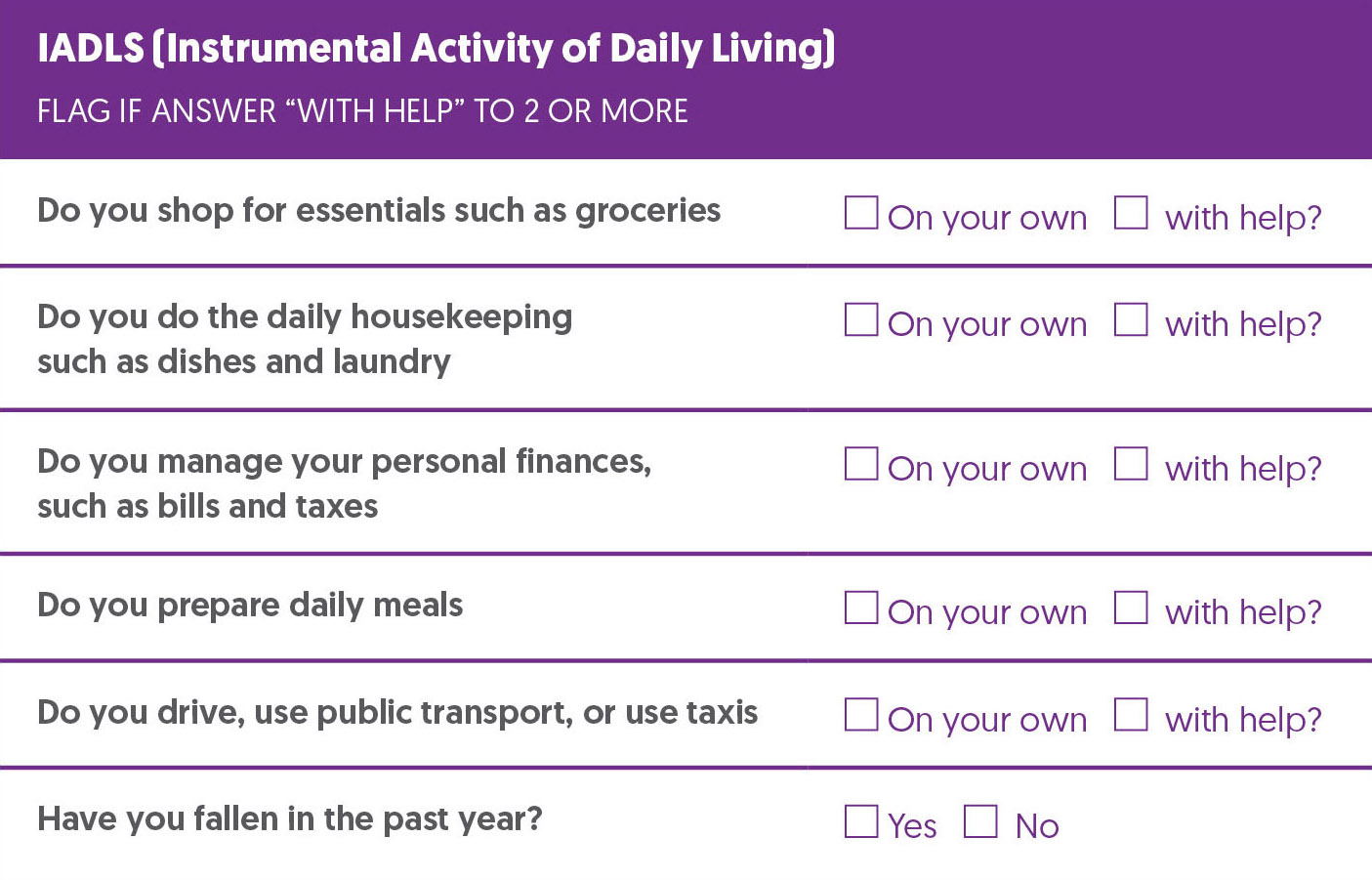
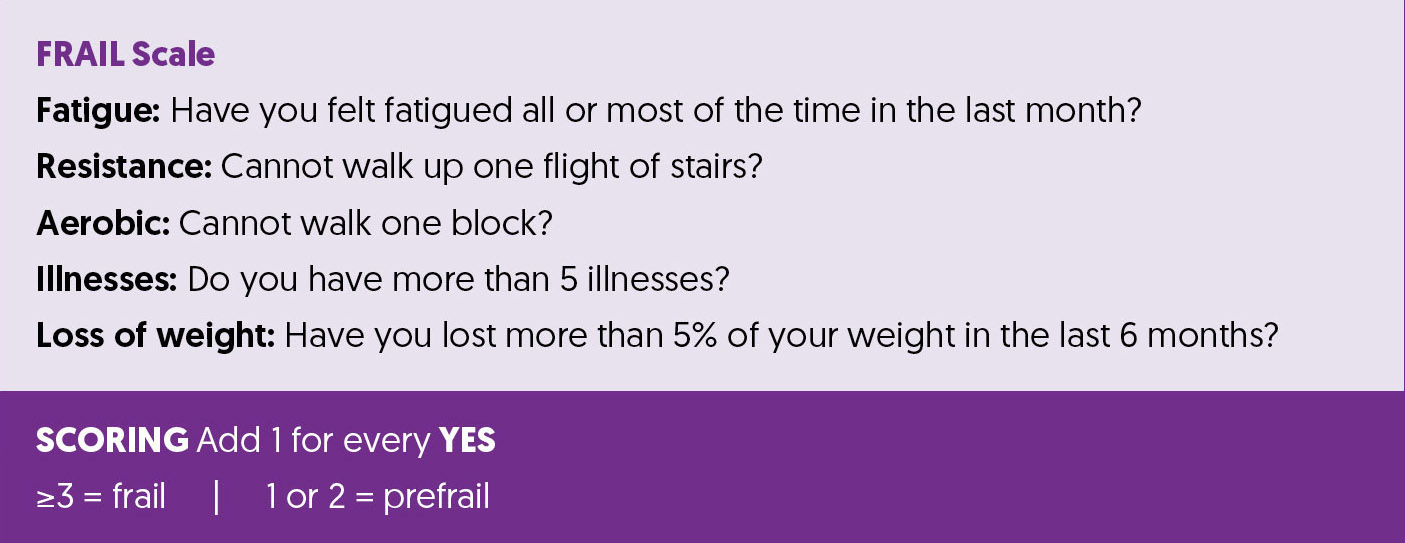
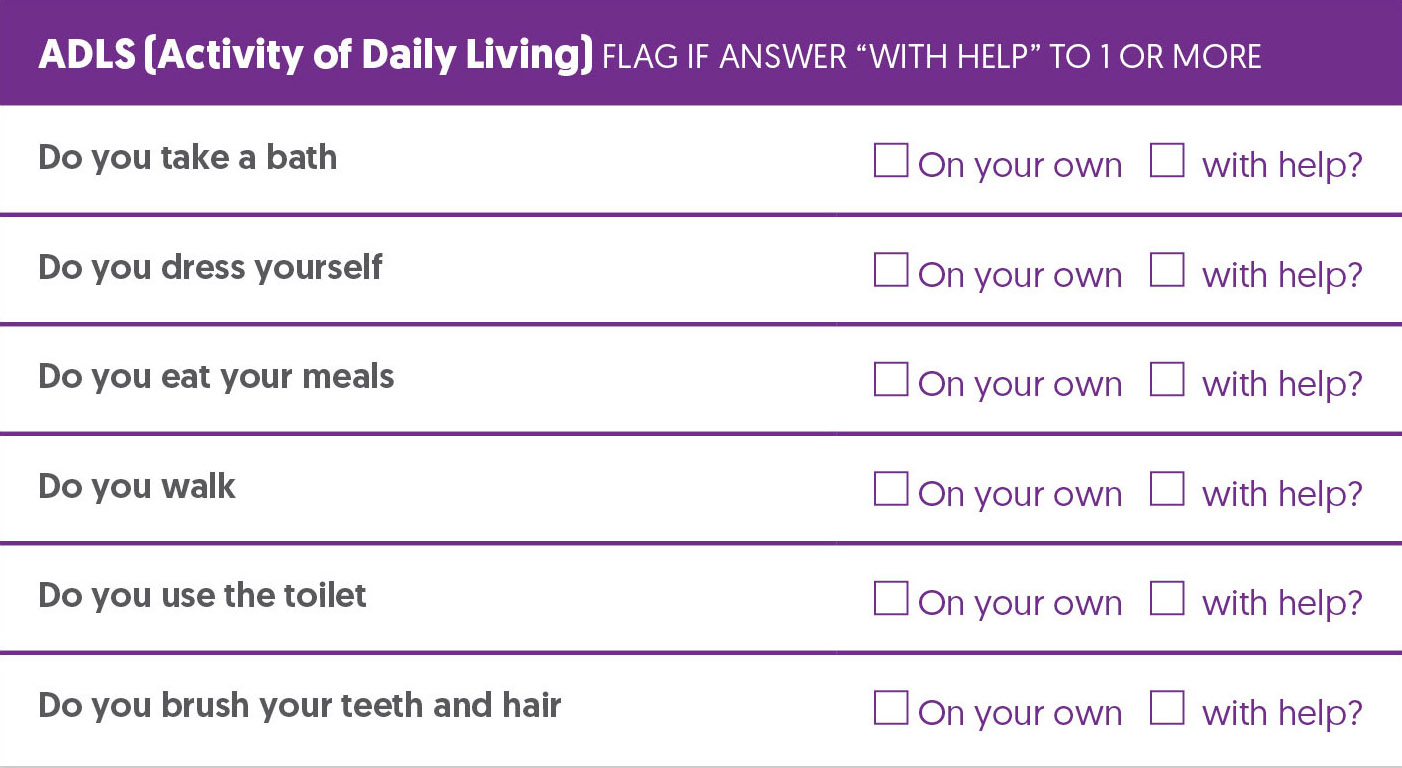
Screening Tools

The FRAIL scale has been validated as a preoperative screening tool for frailty and as a predictor of mortality and postoperative complication. (4) Many geriatricians find ADLs and IADLs as a useful adjunct to a screening tool.
Prehabilitation and Optimization Algorithm
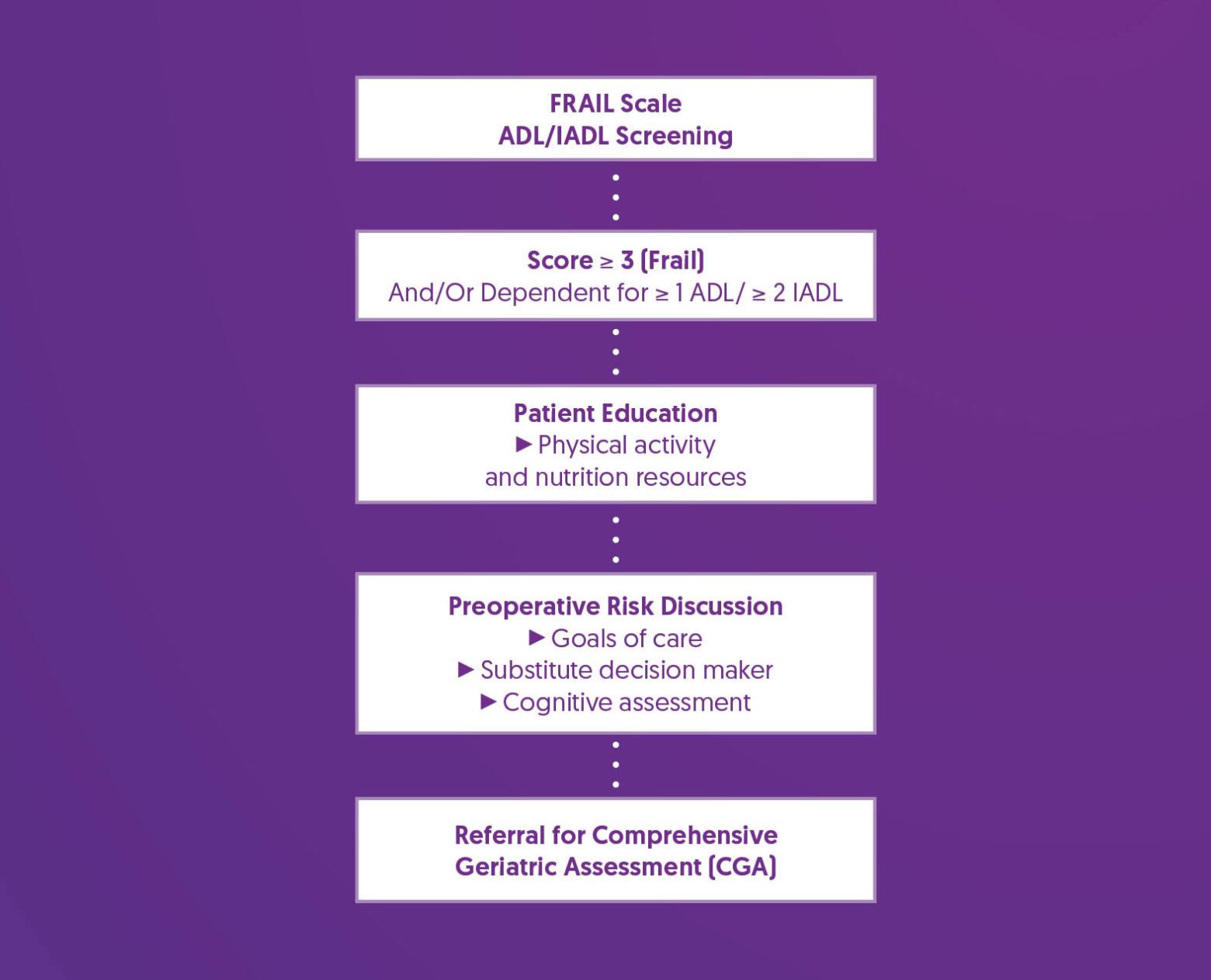
Prehabilitation and Optimization Recommendations

Patient Education
  • Refer to online patient resources for frailty-specific physical prehab and nutrition resources, including information on how to access physiotherapy for patients with frailty
Preoperative Risk Discussion
  • Assess goals of care and advance care plan (e.g., complete MOST form)
  • Identify substitute decision maker
  • Assess for cognitive impairment and ability to provide consent for surgery
  • Refer to online provider resources for assessment tools (e.g., Mini-Cog or MMSE)
Referral for Comprehensive Geriatric Assessment (CGA)
  • Referral to geriatrician can be useful prior to moderate/highly invasive surgery
  • If no local specialist, refer to provider online resources for telehealth consultation options

References

1. Fried, L. P., Tangen, C. M., Walston, J., Newman, A. B., Hirsch, C., Gottdiener, J., Seeman, T., Tracy, R., Kop, W. J., Burke, G., McBurnie, M. A., & Cardiovascular Health Study Collaborative Research Group (2001). Frailty in older adults: evidence for a phenotype. The journals of gerontology. Series A, Biological sciences and medical sciences, 56(3), M146–M156. https://doi.org/10.1093/gerona/56.3.m146

2. Lin, H. S., Watts, J. N., Peel, N. M., & Hubbard, R. E. (2016). Frailty and post-operative outcomes in older surgical patients: a systematic review. BMC geriatrics, 16(1), 157. https://doi.org/10.1186/s12877-016-0329-8

3. McIsaac, D. I., Aucoin, S. D., Bryson, G. L., Hamilton, G. M., & Lalu, M. M. (2021). Complications as a Mediator of the Perioperative Frailty–Mortality Association. Anesthesiology, 134(4), 577–587. https://doi.org/10.1097/ALN.0000000000003699

4. Gong, S., Qian, D., Riazi, S., Chung, F., Englesakis, M., Li, Q., Huszti, E., & Wong, J. (2023). Association Between the FRAIL Scale and Postoperative Complications in Older Surgical Patients: A Systematic Review and Meta-Analysis. Anesthesia and analgesia, 136(2), 251–261. https://doi.org/10.1213/ANE.0000000000006272

Delirium Surgical Prehabilitation Toolkit for Healthcare Providers Glycemic Control
  • Printer-friendly version

Surgical Prehabilitation Toolkit

  • Anemia
  • Cardiac Risk
  • Delirium
  • Frailty
  • Glycemic Control
  • Goals of Care
  • Mental Wellbeing
  • Nutrition
  • Obesity
  • Obstructive Sleep Apnea
  • Pain Management
  • Physical Activity
  • Smoking Cessation
  • Substance Use - Alcohol
  • Substance Use - Cannabis
  • Substance Use - Illicit Substances
  • Support After Surgery

About Us

  • Committee Members
  • Reports

SSC Fees

  • Advance Care Planning
  • Discharge Care Planning
  • Group Medical Visits (GMV)
  • Multidisciplinary Conferencing
  • Patient Follow-up Fees
  • Specialist Advice Fees
  • FAQs
  • Labour Market Adjustment Fees

News

  • Upcoming Events
  • SSC newsletters
  • Videos

General Contact

Specialist Services Committee
sscbc@doctorsofbc.ca
604-638-4853  

The Specialist Services Committee acknowledges that we work on the traditional, ancestral, and unceded territories of many different Indigenous Nations throughout British Columbia.

Acknowledging that we are on the traditional territories of First Nations communities is an expression of cultural humility and involves recognizing our duty and desire to support the provision of culturally safe care to First Nations, Inuit, and Métis people in BC. 

Government of BC   Doctors of BC

Specialist Services Committee © Doctors of BC

  • About Us
    • Committee Members
    • Reports
  • What We Do
    • Community Based Specialists
    • Consultant Specialist Team Care
    • Facility Engagement
    • Health System Redesign
    • Physician Quality Improvement Initiative
    • Physician Leadership Development
    • UBC Sauder Physician Leadership Program
    • Specialists Well-Being Pilot (SWELL)
    • Perioperative Clinical Action Network (PCAN)
    • SSC Fees
  • News
    • Upcoming Events
    • SSC newsletters
    • Videos
  • Contact
  • The Exchange
  • FE Knowledge Sharing
  • Main Menu
  • search