Substance use is associated with increased postoperative complications, prolonged hospital length of stay, and increased healthcare costs. (1-4) Acute intoxication and chronic use have implications for perioperative care. (5)
Additional challenges depend on the severity and type of substance(s) used, as well as other factors that may be associated with substance use, including experiencing homelessness or mental illness. Collaboration with community providers is important, especially for patients being treated for opioid use disorder.
Screening Tools
Screening Questions:
- In the last 12 months, have you used drugs other than those required for medical reasons? (not including alcohol or cannabis)
- If yes, characterize drug use (drug, dose, frequency, and route of administration)
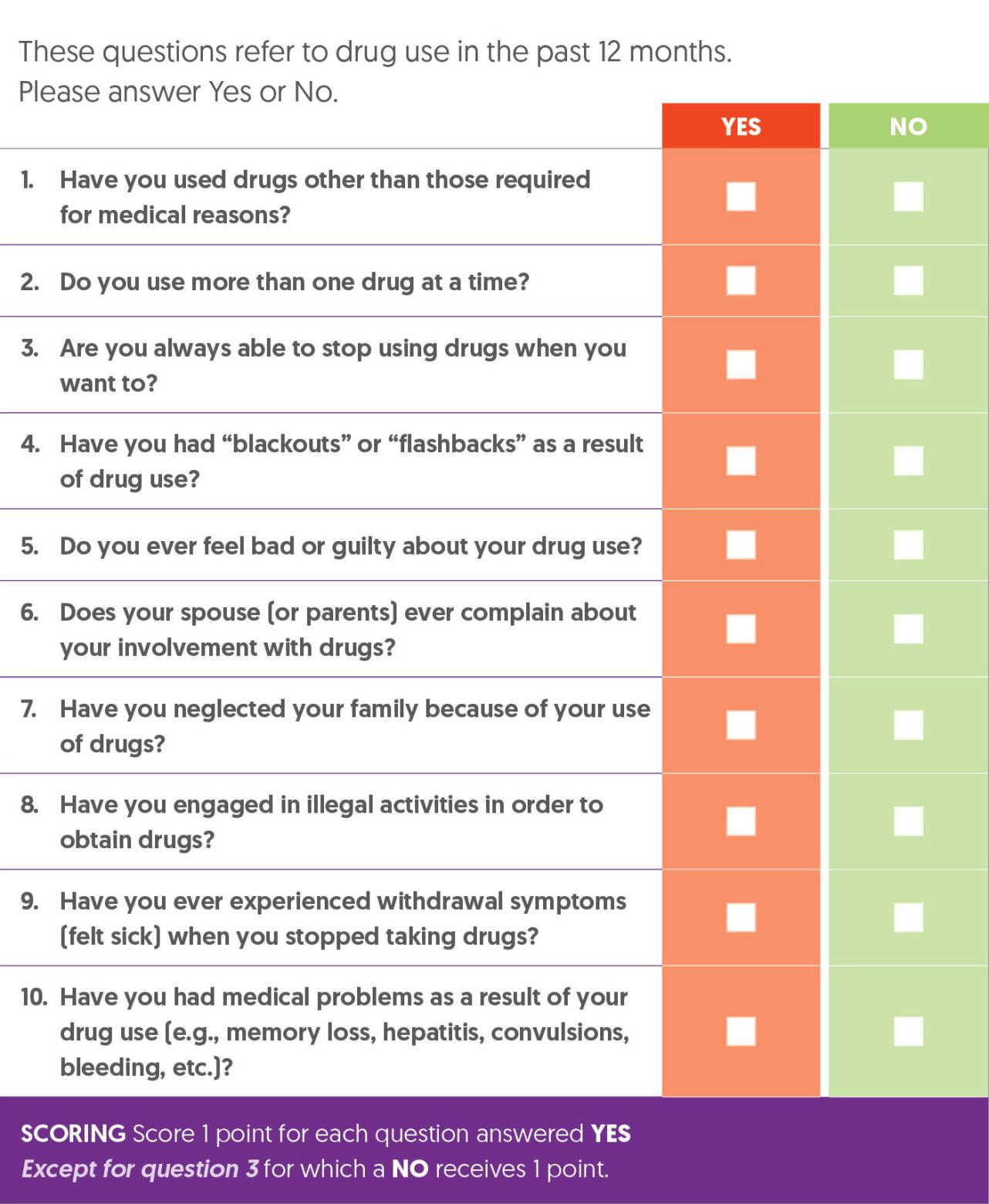
The Drug Abuse Screening Test (DAST-10) is a validated 10-item brief screening tool that assesses drug use (excluding alcohol and tobacco), in the past 12 months and gives a score of the degree of problems related to drug use and misuse. (6,7) This allows preoperative interventions to target those patients with substantial or severe problems related to drug abuse.
Drug Abuse Screening Test (DAST-10)
Prehabilitation and Optimization Algorithm
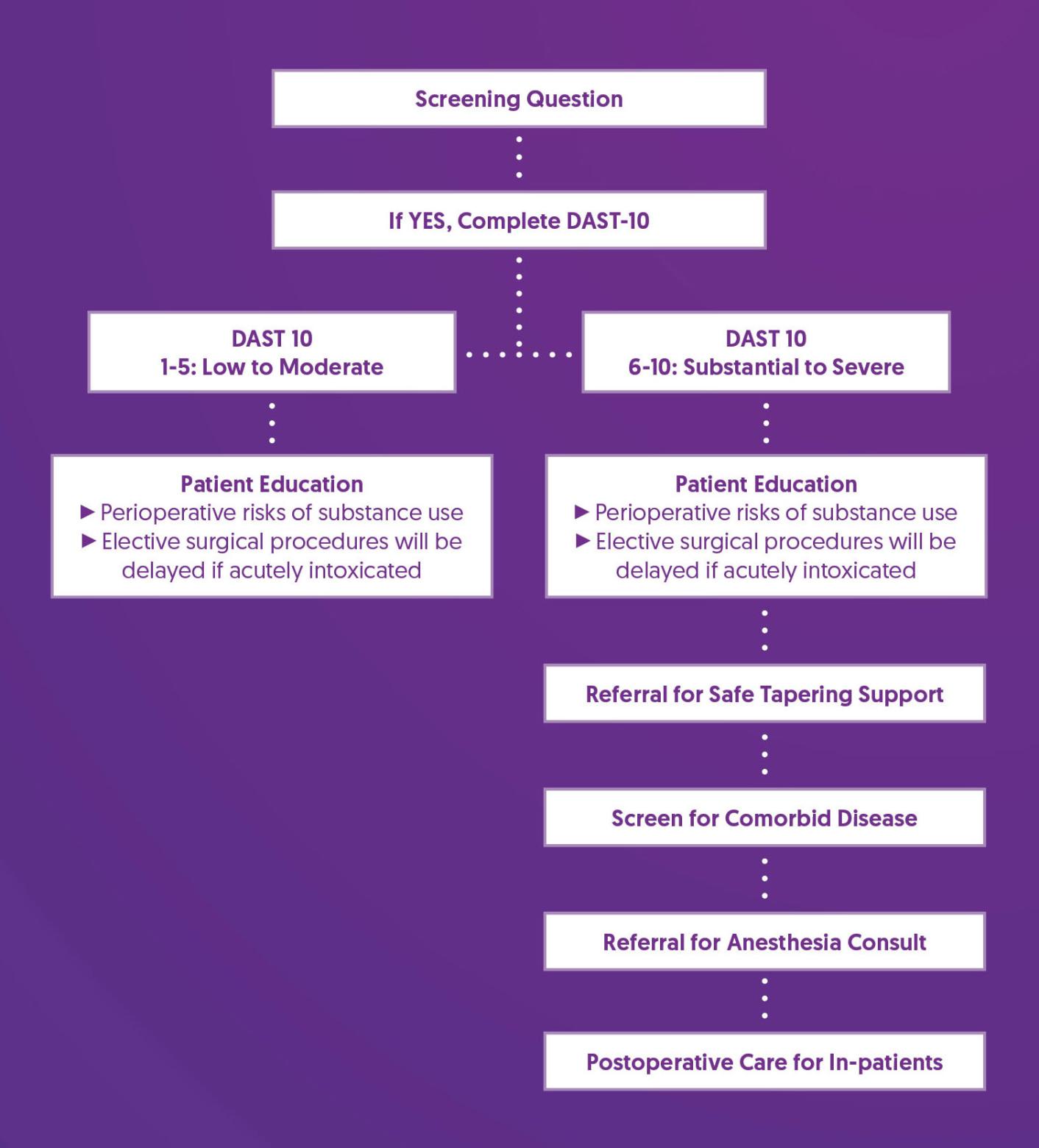
Prehabilitation and Optimization Recommendations
| Patient Education |
|
| Referral for Safe Tapering Support |
|
| Screen for Comorbid Disease |
|
| Referral for Anesthesia Consult |
|
| Postoperative Care for Inpatients |
|
References
1. Kulshrestha, S., Bunn, C., Gonzalez, R., Afshar, M., Luchette, F. A., & Baker, M. S. (2021). Unhealthy alcohol and drug use is associated with an increased length of stay and hospital cost in patients undergoing major upper gastrointestinal and pancreatic oncologic resections. Surgery, 169(3), 636–643. https://doi.org/10.1016/j.surg.2020.07.059
2. Venishetty, N., Nguyen, I., Sohn, G., Bhalla, S., Mounasamy, V., & Sambandam, S. (2023). The effect of cocaine on patients undergoing total hip arthroplasty. Journal of orthopaedics, 43, 64–68. https://doi.org/10.1016/j.jor.2023.07.029
3. Best, M. J., Buller, L. T., Klika, A. K., & Barsoum, W. K. (2015). Outcomes Following Primary Total Hip or Knee Arthroplasty in Substance Misusers. The Journal of arthroplasty, 30(7), 1137–1141. https://doi.org/10.1016/j.arth.2015.01.052
4. Raso, J., Althoff, A., Brunette, C., Kamalapathy, P., Arney, M., & Werner, B. C. (2023). Preoperative Substance Use Disorder Is Associated With an Increase in 90-Day Postoperative Complications, 1-Year Revisions and Conversion to Arthroplasty Following Arthroscopic Rotator Cuff Repair: Substance Use Disorder on the Rise. Arthroscopy : the journal of arthroscopic & related surgery: official publication of the Arthroscopy Association of North America and the International Arthroscopy Association, 39(6), 1386–1393.e4. https://doi.org/10.1016/j.arthro.2022.12.026
5. Jimenez Ruiz, F., Warner, N. S., Acampora, G., Coleman, J. R., & Kohan, L. (2023). Substance Use Disorders: Basic Overview for the Anesthesiologist. Anesthesia and analgesia, 137(3), 508–520. https://doi.org/10.1213/ANE.0000000000006281
6. Yudko, E., Lozhkina, O., & Fouts, A. (2007). A comprehensive review of the psychometric properties of the Drug Abuse Screening Test. Journal of substance abuse treatment, 32(2), 189–198. https://doi.org/10.1016/j.jsat.2006.08.002
7. Gavin, D. R., Ross, H. E., & Skinner, H. A. (1989). Diagnostic validity of the drug abuse screening test in the assessment of DSM-III drug disorders. British journal of addiction, 84(3), 301–307. https://doi.org/10.1111/j.1360-0443.1989.tb03463.x
8. Gould, R., Lindenbaum, L., & Rogers, K., (2024). Anesthesia for patients with substance use disorder or acute intoxication. UpToDate. Retrieved Aug 24, 2024, from https://www.uptodate.com/contents/anesthesia-for-patients-with-substance-use-disorder-or-acute-intoxication