Frailty
Frailty is a clinical state of increased vulnerability due to age-associated decline in physiological reserve, resulting in compromised ability to cope with external everyday or acute stressors. (1) Preoperative frailty is associated with increased postoperative complications, mortality, and longer-term negative outcomes, including falls, lower quality of life, non-home discharge, and prolonged length of stay. (2,3)
Screening Tools
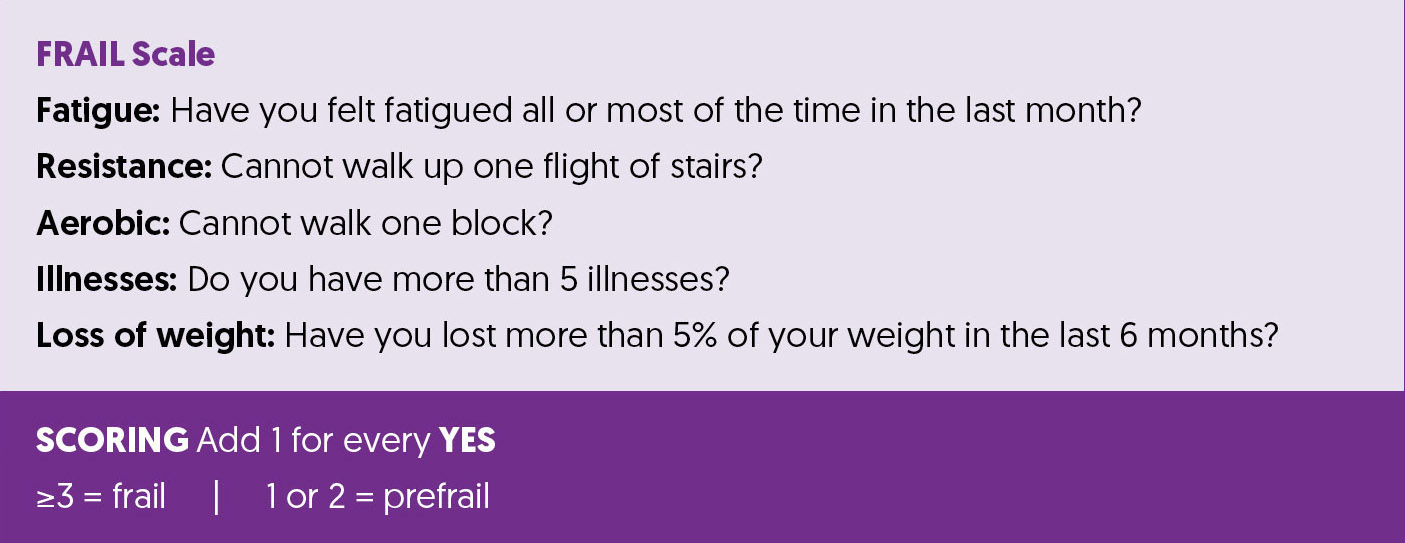
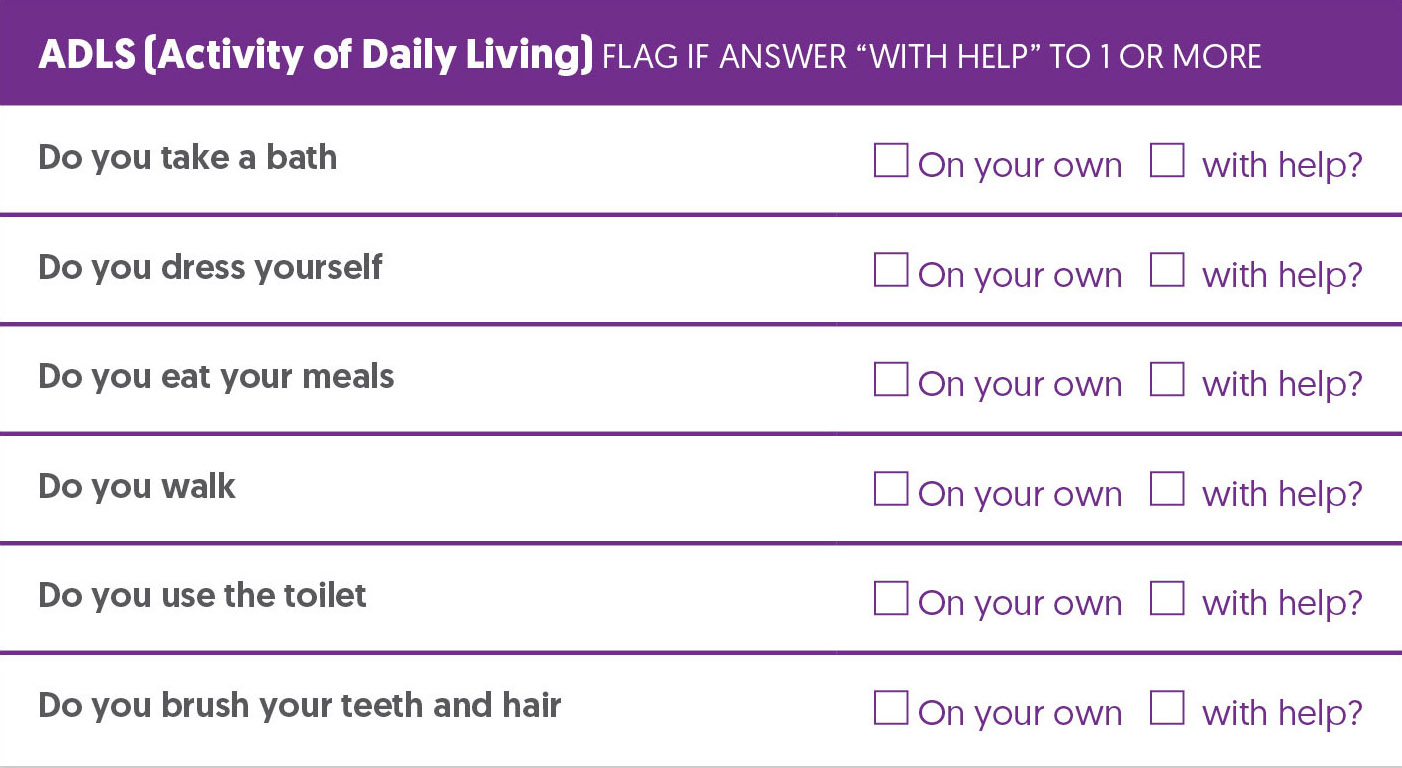
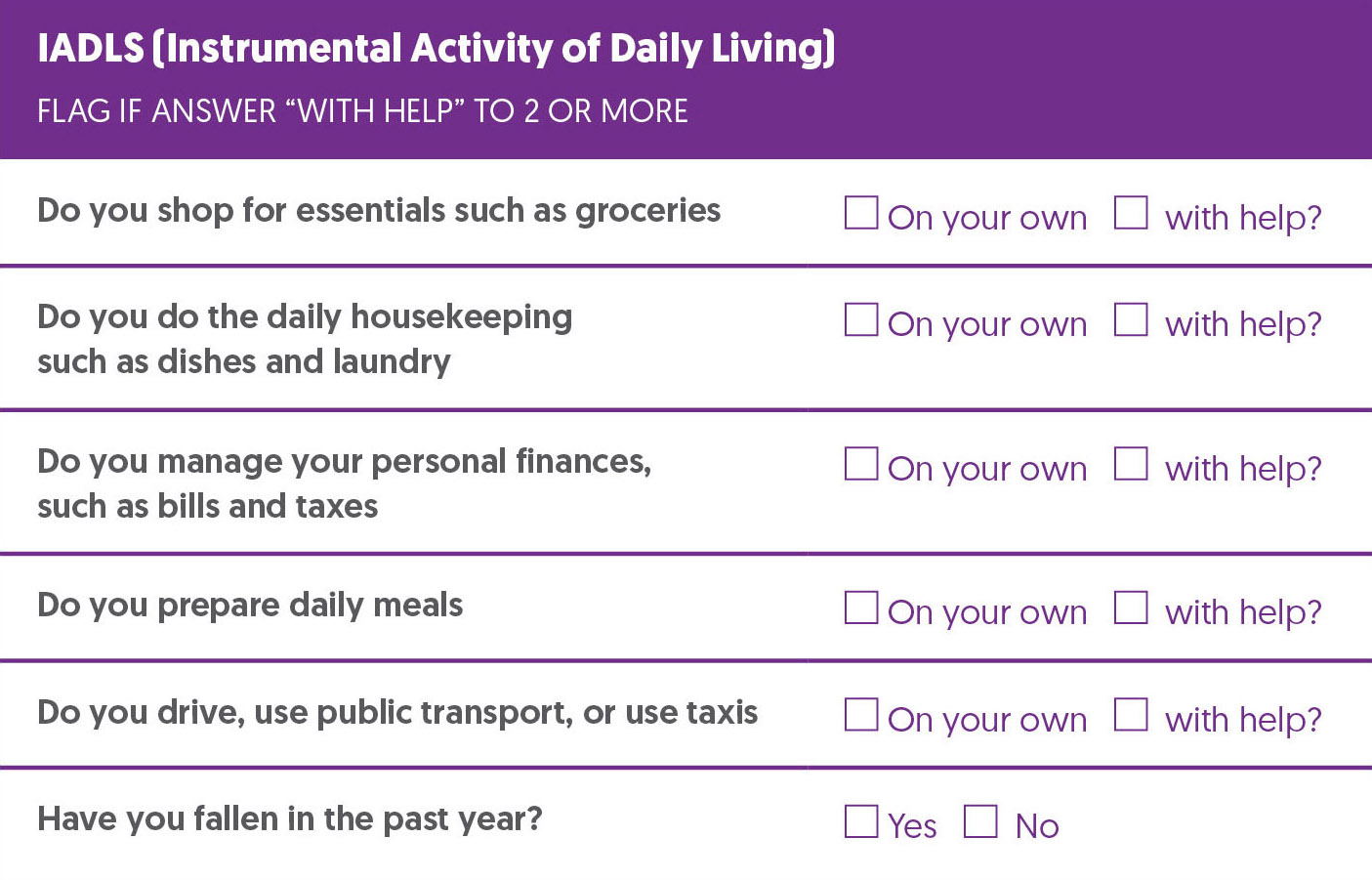
The FRAIL Scale is a validated preoperative screening tool for frailty and predictor of mortality and postoperative complications that can be completed entirely by the patient, making it well suited for standardized preoperative screening. (4) Many geriatricians find assessment of ADLs and IADLs to be a useful adjunct.
Although the Clinical Frailty Scale (CFS) is the preferred tool for clinical frailty assessment, it requires clinician judgment and is therefore not appropriate for patient-completed screening. Patients identified as at risk using the FRAIL Scale should undergo further clinical assessment, with the CFS used where appropriate to confirm frailty and inform perioperative planning. (5–7)
Prehabilitation and Optimization Algorithm
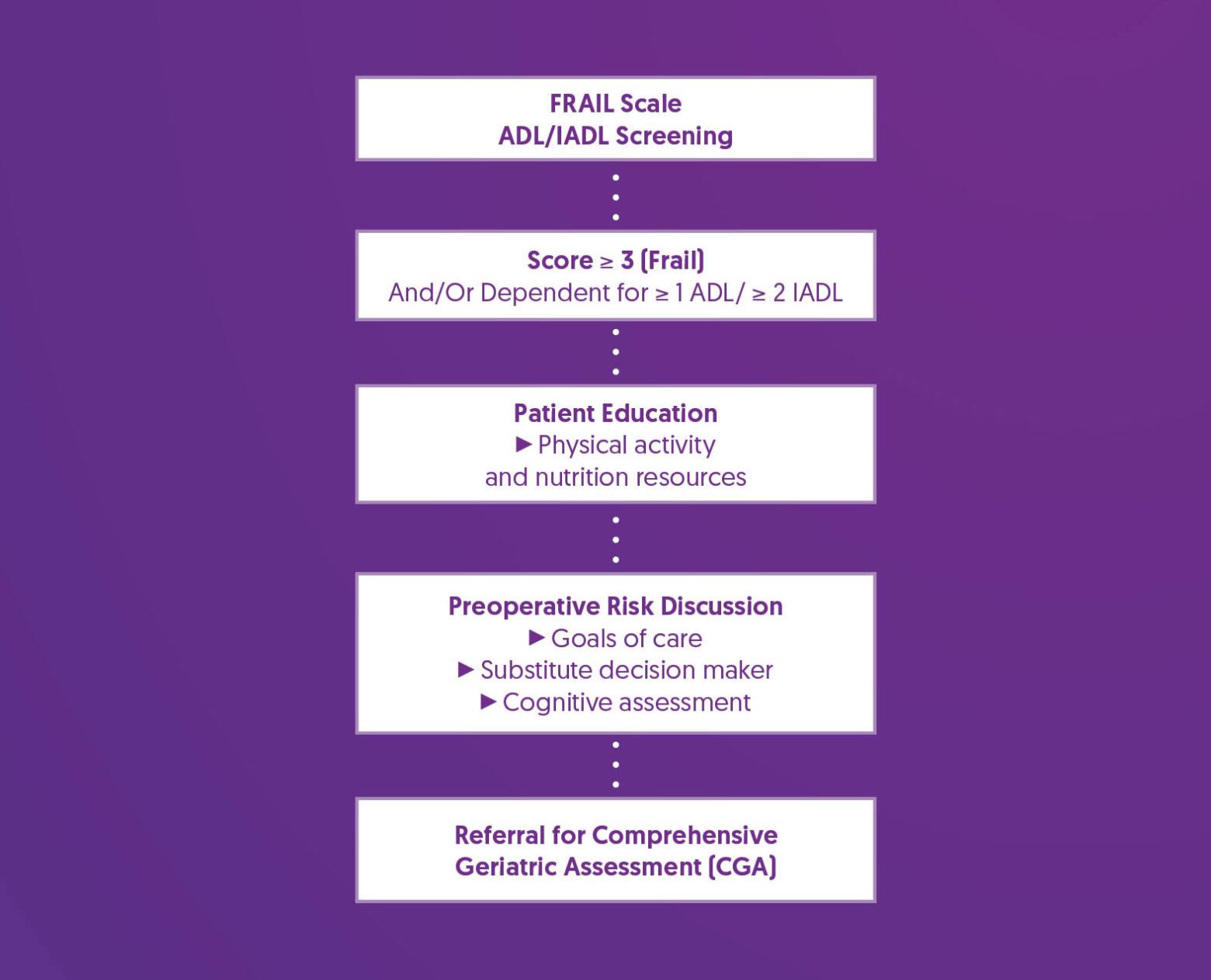
Prehabilitation and Optimization Recommendations
| Patient Education |
|
| Preoperative Risk Discussion |
|
| Referral for Comprehensive Geriatric Assessment (CGA) |
|
References
1. Fried, L. P., Tangen, C. M., Walston, J., Newman, A. B., Hirsch, C., Gottdiener, J., Seeman, T., Tracy, R., Kop, W. J., Burke, G., McBurnie, M. A., & Cardiovascular Health Study Collaborative Research Group (2001). Frailty in older adults: evidence for a phenotype. The journals of gerontology. Series A, Biological sciences and medical sciences, 56(3), M146–M156. https://doi.org/10.1093/gerona/56.3.m146
2. Lin, H. S., Watts, J. N., Peel, N. M., & Hubbard, R. E. (2016). Frailty and post-operative outcomes in older surgical patients: a systematic review. BMC geriatrics, 16(1), 157. https://doi.org/10.1186/s12877-016-0329-8
3. McIsaac, D. I., Aucoin, S. D., Bryson, G. L., Hamilton, G. M., & Lalu, M. M. (2021). Complications as a Mediator of the Perioperative Frailty–Mortality Association. Anesthesiology, 134(4), 577–587. https://doi.org/10.1097/ALN.0000000000003699
4. Gong, S., Qian, D., Riazi, S., Chung, F., Englesakis, M., Li, Q., Huszti, E., & Wong, J. (2023). Association Between the FRAIL Scale and Postoperative Complications in Older Surgical Patients: A Systematic Review and Meta-Analysis. Anesthesia and analgesia, 136(2), 251–261. https://doi.org/10.1213/ANE.0000000000006272
5. Sieber, F., McIsaac, D. I., Deiner, S., Azefor, T., Berger, M. et al. (2025). 2025 American Society of Anesthesiologists practice advisory for perioperative care of older adults scheduled for inpatient surgery. Anesthesiology. 142:22-51.
6. Aucoin, S. D., Hao, M., Sohi, R., Shaw, J., Bentov, I. et al. (2020). Accuracy and feasibility of clinically applied frailty instruments before surgery. Anesthesiology. 133:78-95.
7. McIsaac, D. I., Harris, E. P., Hladkowicz, E., Moloo, H., Lalu, M. M. et al. (2020). Prospective comparison of preoperative predictive performance between 3 leading frailty instruments. Anesth Analg. 131(1):263-272.