Jump to Navigation

What can we help you find today? Type what you’re looking for in the space below.

Close
  • About Us
    • Committee Members
    • Reports
  • What We Do
    • Community Based Specialists
    • Consultant Specialist Team Care
    • Facility Engagement
    • Physician Quality Improvement Initiative
    • Physician Leadership Development
    • UBC Sauder Physician Leadership Program
    • Specialists Well-Being Pilot (SWELL)
    • Perioperative Clinical Action Network (PCAN)
    • SSC Fees
  • News
    • Upcoming Events
    • SSC newsletters
    • Videos
  • Contact
  • The Exchange
  • FE Knowledge Sharing
  • Main Menu
  • search

Frailty

Frailty is a clinical state of increased vulnerability due to age-associated decline in physiological reserve, resulting in compromised ability to cope with external everyday or acute stressors. (1) Preoperative frailty is associated with increased postoperative complications, mortality, and longer-term negative outcomes, including falls, lower quality of life, non-home discharge, and prolonged length of stay. (2,3)

Screening Tools

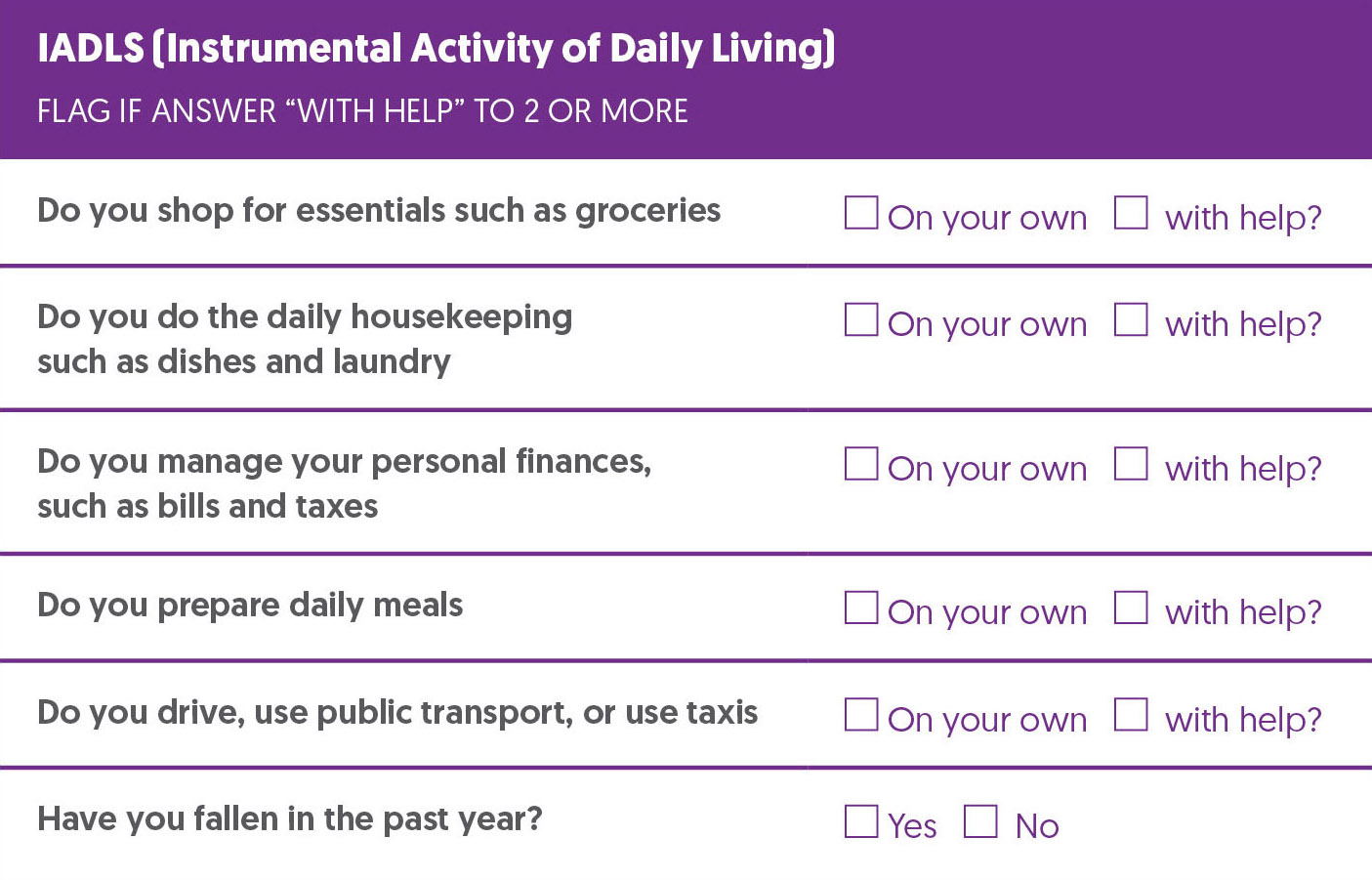
The FRAIL Scale is a validated preoperative screening tool for frailty and predictor of mortality and postoperative complications that can be completed entirely by the patient, making it well suited for standardized preoperative screening. (4) Many geriatricians find assessment of ADLs and IADLs to be a useful adjunct. 

Although the Clinical Frailty Scale (CFS) is the preferred tool for clinical frailty assessment, it requires clinician judgment and is therefore not appropriate for patient-completed screening. Patients identified as at risk using the FRAIL Scale should undergo further clinical assessment, with the CFS used where appropriate to confirm frailty and inform perioperative planning. (5–7)
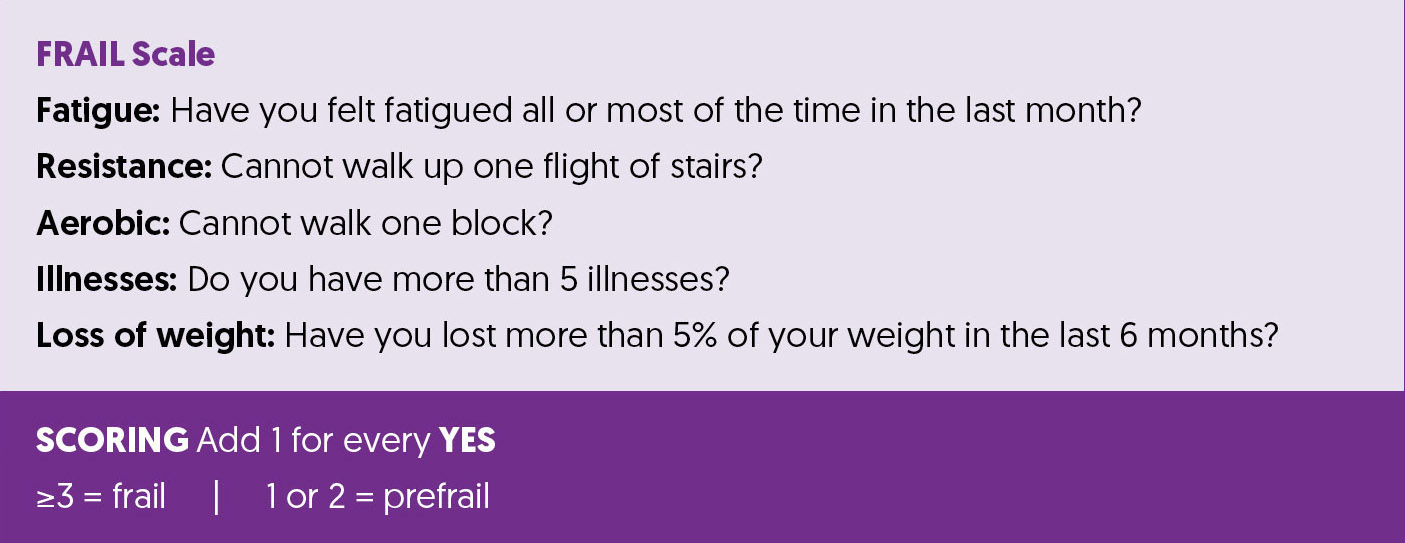
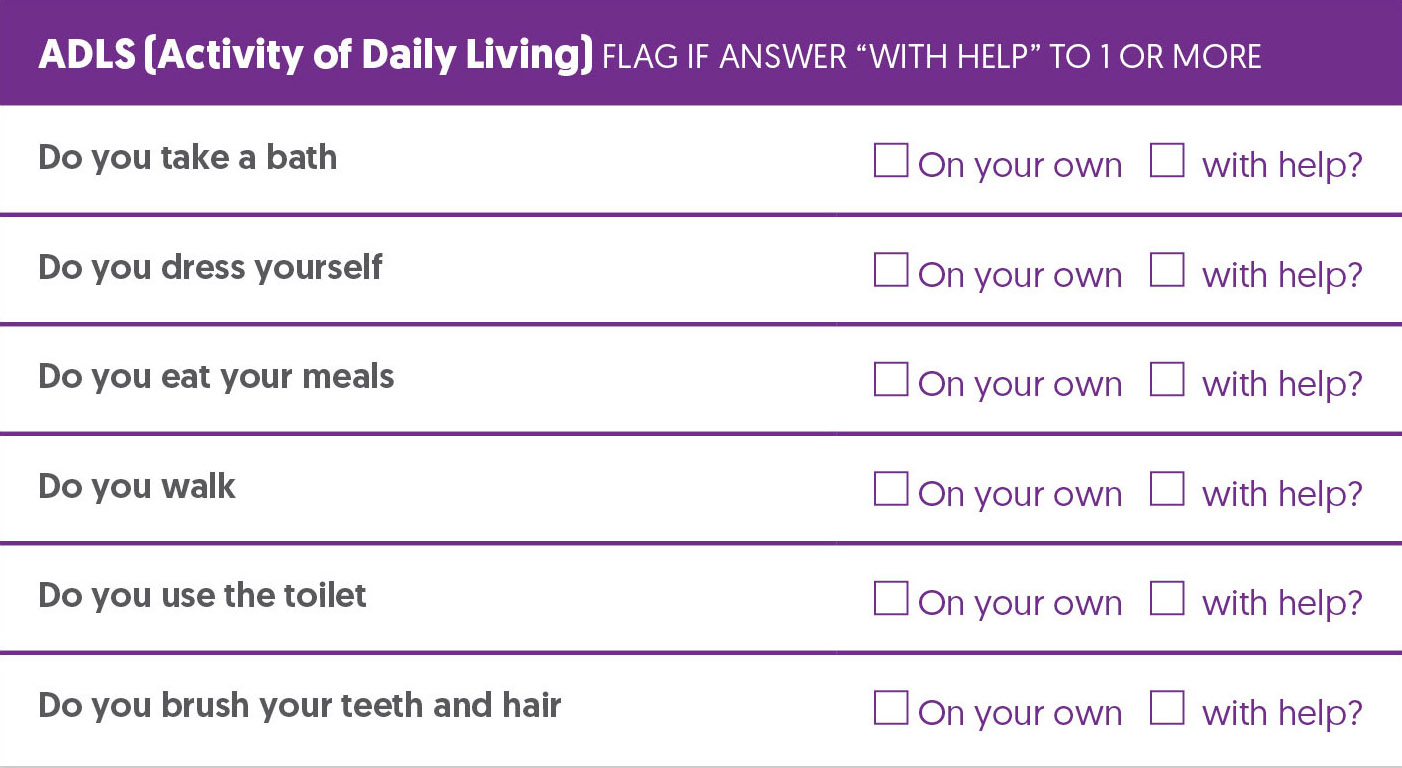
 

Prehabilitation and Optimization Algorithm
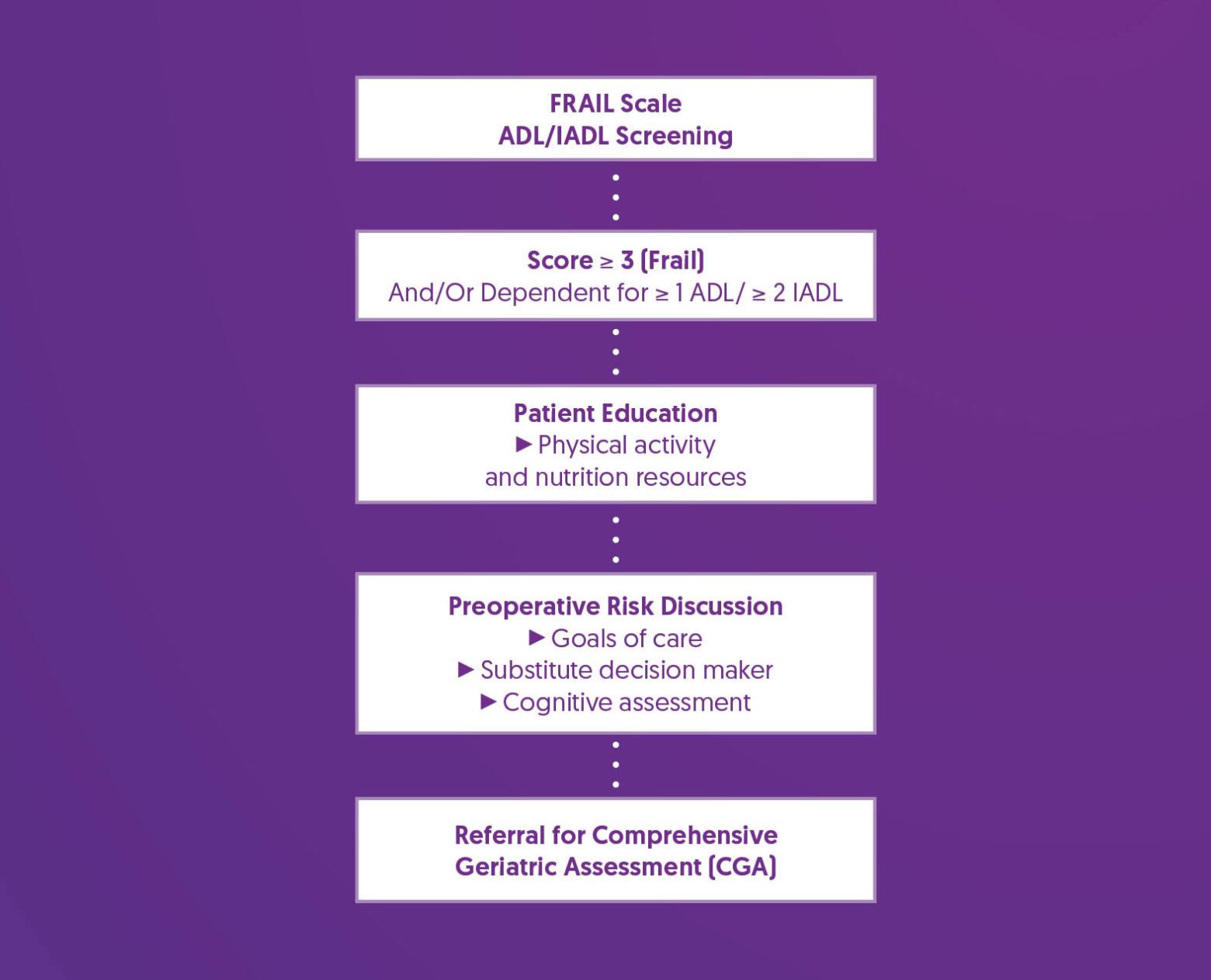
Prehabilitation and Optimization Recommendations

Patient Education
  • Refer to online patient resources for frailty-specific physical prehab and nutrition resources, including information on how to access physiotherapy for patients with frailty
Preoperative Risk Discussion
  • Assess goals of care and advance care plan (e.g., complete MOST form)
  • Identify substitute decision maker
  • Assess for cognitive impairment and ability to provide consent for surgery (e.g., Clinical Frailty Scale, Mini-Cog or MMSE)
  • Refer to online provider resources for assessment tools
Referral for Comprehensive Geriatric Assessment (CGA)
  • Referral to geriatrician can be useful prior to moderate/highly invasive surgery
  • If no local specialist, refer to provider online resources for telehealth consultation options

References

1. Fried, L. P., Tangen, C. M., Walston, J., Newman, A. B., Hirsch, C., Gottdiener, J., Seeman, T., Tracy, R., Kop, W. J., Burke, G., McBurnie, M. A., & Cardiovascular Health Study Collaborative Research Group (2001). Frailty in older adults: evidence for a phenotype. The journals of gerontology. Series A, Biological sciences and medical sciences, 56(3), M146–M156. https://doi.org/10.1093/gerona/56.3.m146

2. Lin, H. S., Watts, J. N., Peel, N. M., & Hubbard, R. E. (2016). Frailty and post-operative outcomes in older surgical patients: a systematic review. BMC geriatrics, 16(1), 157. https://doi.org/10.1186/s12877-016-0329-8

3. McIsaac, D. I., Aucoin, S. D., Bryson, G. L., Hamilton, G. M., & Lalu, M. M. (2021). Complications as a Mediator of the Perioperative Frailty–Mortality Association. Anesthesiology, 134(4), 577–587. https://doi.org/10.1097/ALN.0000000000003699

4. Gong, S., Qian, D., Riazi, S., Chung, F., Englesakis, M., Li, Q., Huszti, E., & Wong, J. (2023). Association Between the FRAIL Scale and Postoperative Complications in Older Surgical Patients: A Systematic Review and Meta-Analysis. Anesthesia and analgesia, 136(2), 251–261. https://doi.org/10.1213/ANE.0000000000006272

5. Sieber, F., McIsaac, D. I., Deiner, S., Azefor, T., Berger, M. et al. (2025). 2025 American Society of Anesthesiologists practice advisory for perioperative care of older adults scheduled for inpatient surgery. Anesthesiology. 142:22-51.

6. Aucoin, S. D., Hao, M., Sohi, R., Shaw, J., Bentov, I. et al. (2020). Accuracy and feasibility of clinically applied frailty instruments before surgery. Anesthesiology. 133:78-95.

7. McIsaac, D. I., Harris, E. P., Hladkowicz, E., Moloo, H., Lalu, M. M. et al. (2020). Prospective comparison of preoperative predictive performance between 3 leading frailty instruments. Anesth Analg. 131(1):263-272.


 

Delirium Surgical Prehabilitation Toolkit for Healthcare Providers Glycemic Control
  • Printer-friendly version

Surgical Prehabilitation Toolkit

  • Anemia
  • Cardiac Risk
  • Delirium
  • Frailty
  • Glycemic Control
  • Goals of Care
  • Mental Wellbeing
  • Nutrition
  • Obesity
  • Obstructive Sleep Apnea
  • Pain Management
  • Physical Activity
  • Smoking Cessation
  • Substance Use - Alcohol
  • Substance Use - Cannabis
  • Substance Use - Illicit Substances
  • Support After Surgery

What’s New

Aug 11, 2026

Physician Quality Improvement: Celebrating Level 3 Cohort 8!

Photo of PQI alums at the Summit
Jul 16, 2026

Coming together for Physician Quality Improvement

Colourful artwork featuring an illustration of a narwhal and feather
Jun 1, 2026

Celebrating Indigenous culture: past, present, and future

Photo of doctor at a laptop
May 6, 2026

Transitioning off the Private Physician Network

View all News

About Us

  • Committee Members
  • Reports

SSC Fees

  • Advance Care Planning
  • Discharge Care Planning
  • Group Medical Visits (GMV)
  • Multidisciplinary Conferencing
  • Patient Follow-up Fees
  • Specialist Advice Fees
  • FAQs
  • Labour Market Adjustment Fees

News

  • Upcoming Events
  • SSC newsletters
  • Videos

General Contact

Specialist Services Committee
sscbc@doctorsofbc.ca
604-638-4853  

The land from which the Joint Collaborative Committees—a partnership between Doctors of BC and the BC government—operate and support physicians is the traditional territories of the Coast Salish peoples, including the xʷməθkʷəy̓əm (Musqueam), Sḵwx̱wú7mesh (Squamish), and səlilwətaɬ (Tsleil-Waututh) Nations, whose historical relationship with the land continues today.

For the Joint Collaborative Committees, acknowledging the land is an expression of cultural humility that involves recognizing our commitment to support the provision of culturally safe care to First Nations, Inuit, and Métis people in BC.

Government of BC   Doctors of BC

Specialist Services Committee © Doctors of BC

  • About Us
    • Committee Members
    • Reports
  • What We Do
    • Community Based Specialists
    • Consultant Specialist Team Care
    • Facility Engagement
    • Physician Quality Improvement Initiative
    • Physician Leadership Development
    • UBC Sauder Physician Leadership Program
    • Specialists Well-Being Pilot (SWELL)
    • Perioperative Clinical Action Network (PCAN)
    • SSC Fees
  • News
    • Upcoming Events
    • SSC newsletters
    • Videos
  • Contact
  • The Exchange
  • FE Knowledge Sharing
  • Main Menu
  • search