Preoperative alcohol use is associated with an increased risk of postoperative morbidity, infections, wound complications, pulmonary complications, prolonged hospital length of stay, and admission to intensive care. (1) Screening for alcohol misuse prior to elective surgery allows for further screening for health complications, planning for those at risk of complicated withdrawal, and offering resources for safe tapering preoperatively in those patients who are motivated to do so.
Screening Tools
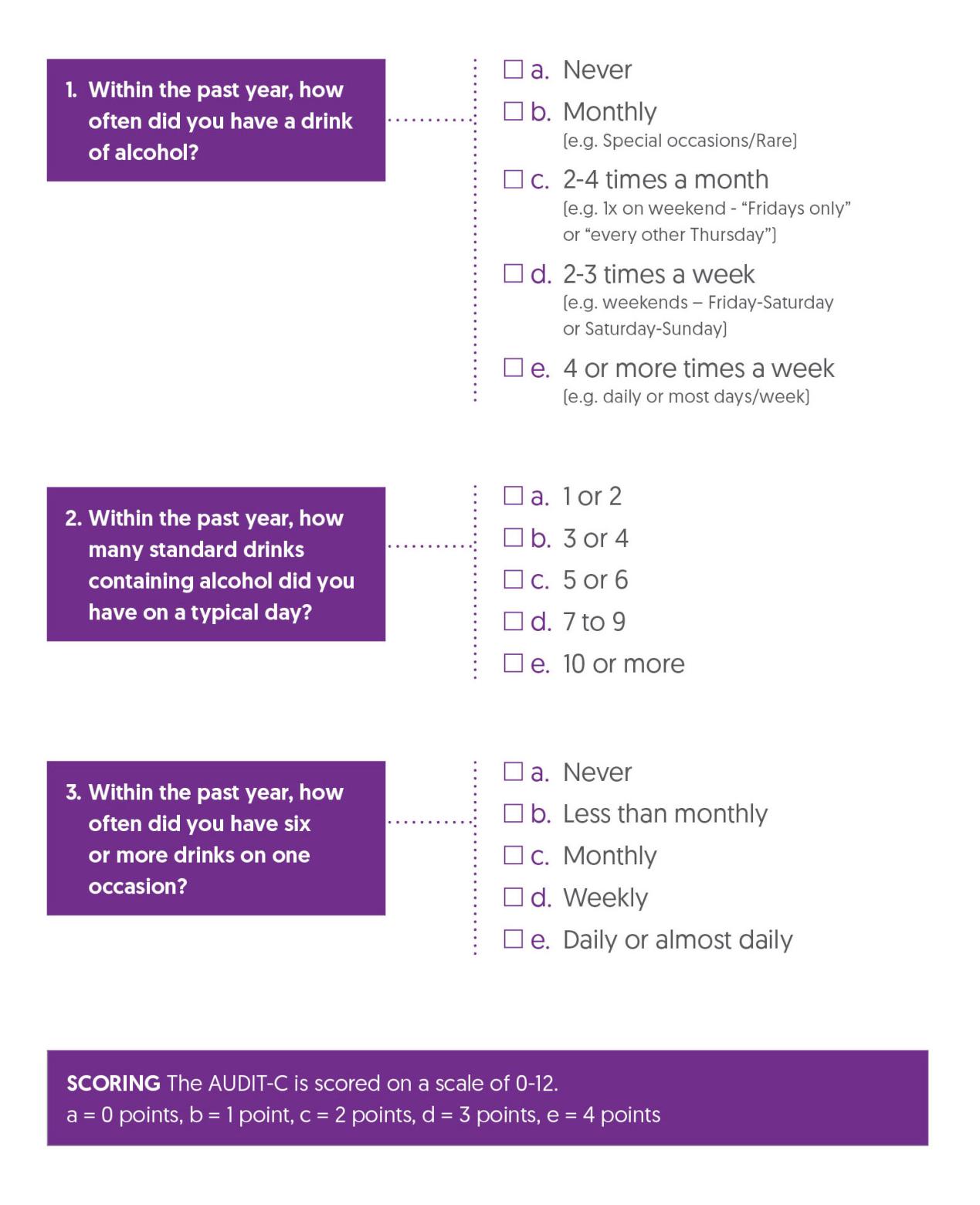
The Alcohol Use Disorder Identification Test (AUDIT-C) is an effective and validated 3-question screen for severity of alcohol misuse that is based on the 10-question AUDIT questionnaire. (2)
AUDIT-C Questionnaire
Prehabilitation and Optimization Algorithm
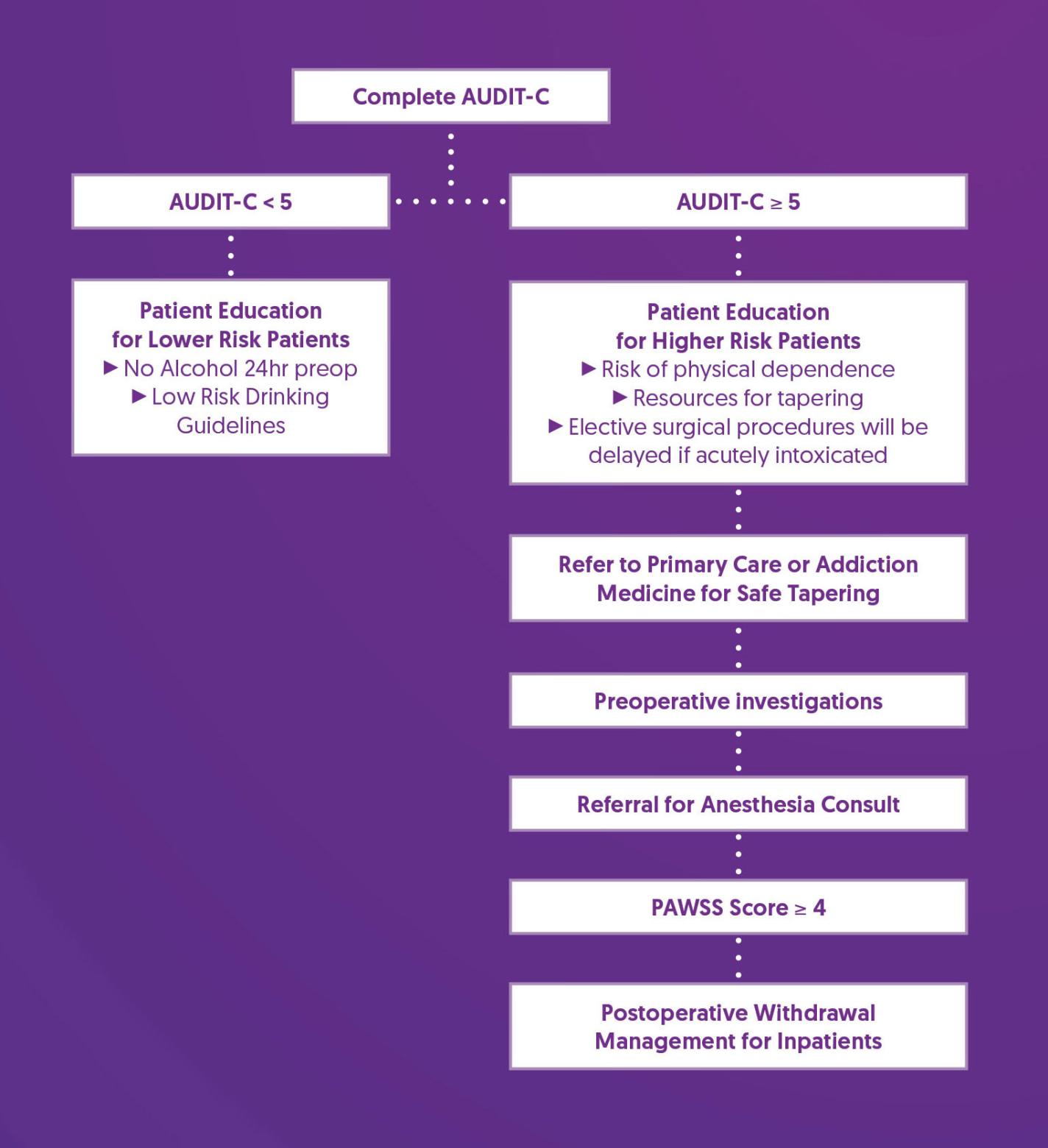
Prehabilitation and Optimization Recommendations
| Patient Education for Lower Risk Patients (AUDIT-C < 5) |
- “Frequent alcohol use before surgery can affect how your body responds to medications. It also decreases your body's ability to fight infection and heal properly. There are many ways that your healthcare team can help you to safely cut down or stop using alcohol. It is important to not use alcohol for at least 24 hours prior to surgery.”
- Discuss Canadian Low Risk Drinking Guidelines: “Research shows that no amount or kind of alcohol is good for your health. It doesn’t matter what kind of alcohol it is—wine, beer, cider or spirits. Drinking alcohol, even a small amount, is damaging to everyone, regardless of age, sex, gender, ethnicity, tolerance for alcohol or lifestyle. That’s why if you drink, it’s better to drink less.” Canada's Low Risk Drinking Guide suggests that:
- 0 drinks per week has benefits such as better health and better sleep.
- 1 to 2 standard drinks per week: You will likely avoid alcohol-related consequences for yourself and others.
- Refer to online patient resources for information on safe alcohol consumption and reduction
- Telephone service: 24-hour BC Alcohol and Drug Information and Referral Service toll-free from anywhere in B.C. at 1-800-663-1441
|
| Patient Education for Higher Risk Patients (AUDIT-C >= 5) |
- “Frequent alcohol use before surgery can affect how your body responds to medications. It also decreases your body's ability to fight infection and heal properly. There are many ways that your healthcare team can help you to safely cut down or stop using alcohol. It is important to not use alcohol for at least 24 hours prior to surgery, however, if you use alcohol daily you could be physically dependent. That means it can be dangerous to stop drinking overnight or cold turkey.”
- Advise patients that elective surgical procedures will be delayed if they are acutely intoxicated
- Patient resources:
- Make an appointment to see your primary care provider (e.g., family doctor)
- Call 811 to speak to a healthcare navigator who can find resources near you to help you slowly and safely reduce your alcohol use prior to surgery
- Refer to online patient resources
|
| Referral for Safe Tapering |
- Primary care or Addiction Medicine for management suggestions
|
| Preoperative Investigations |
- Screening for complications of alcohol use:
- CBC
- INR/PTT
- Albumin ALP
- ALT
- GGT
|
| Referral for Anesthesia Consult |
- Especially if inpatient stay required
|
| PAWSS Score |
- To assess risk of complicated withdrawal
- PAWSS score >= 4 indicates high risk of complicated withdrawal
|
| Postoperative Withdrawal Management for Inpatients |
- Consider involving Addiction Medicine in hospital, especially if PAWSS >= 4
- Alcohol withdrawal management postoperative orders (CIWA)
|
References
1. Eliasen, M., Grønkjær, M., Skov-Ettrup, L. S., Mikkelsen, S. S., Becker, U., Tolstrup, J. S., & Flensborg-Madsen, T. (2013). Preoperative alcohol consumption and postoperative complications: a systematic review and meta-analysis. Annals of surgery, 258(6), 930–942. https://doi.org/10.1097/SLA.0b013e3182988d59
2. Bush, K., Kivlahan, D. R., McDonell, M. B., Fihn, S. D., & Bradley, K. A. (1998). The AUDIT alcohol consumption questions (AUDIT-C): an effective brief screening test for problem drinking. Ambulatory Care Quality Improvement Project (ACQUIP). Alcohol Use Disorders Identification Test. Archives of internal medicine, 158(16), 1789–1795. https://doi.org/10.1001/archinte.158.16.1789