Mental Wellbeing
Significant anxiety and depression are associated with increased postoperative pain, prolonged hospital length of stay, and hospital readmission, as well as many other postoperative complications (1,2). Preoperative education and expectation setting can help reduce postoperative anxiety, depression, and length of stay, and improve patient experiences and outcomes. (3,4)
Screening Tools
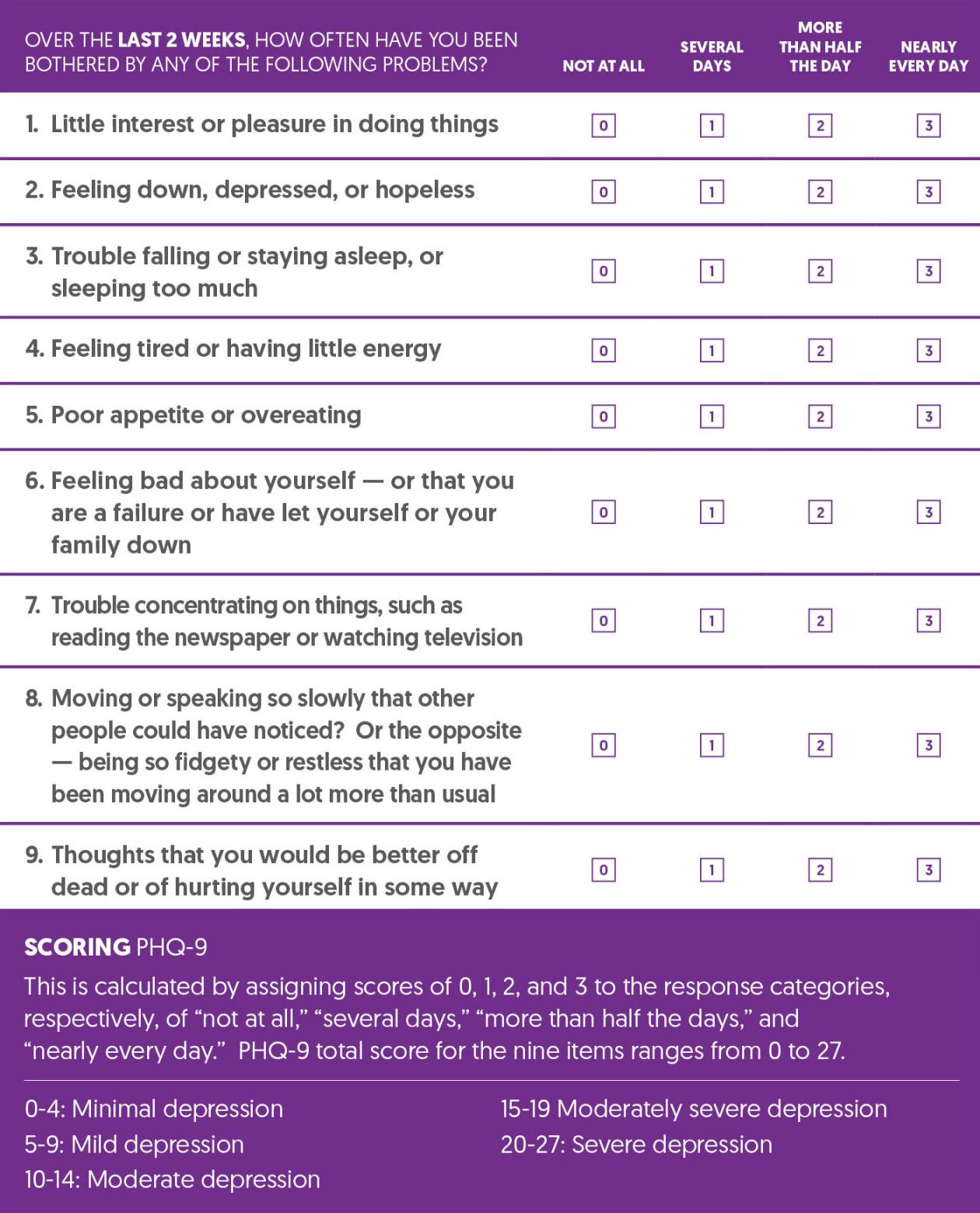
The Patient Health Questionnaire-2 (PHQ-2) is an initial screening tool for depression, comprising the first two questions of the Patient Health Questionnaire-9 (PHQ-9). A PHQ-2 score of 3 or more warrants completion of the PHQ-9. (5,6)
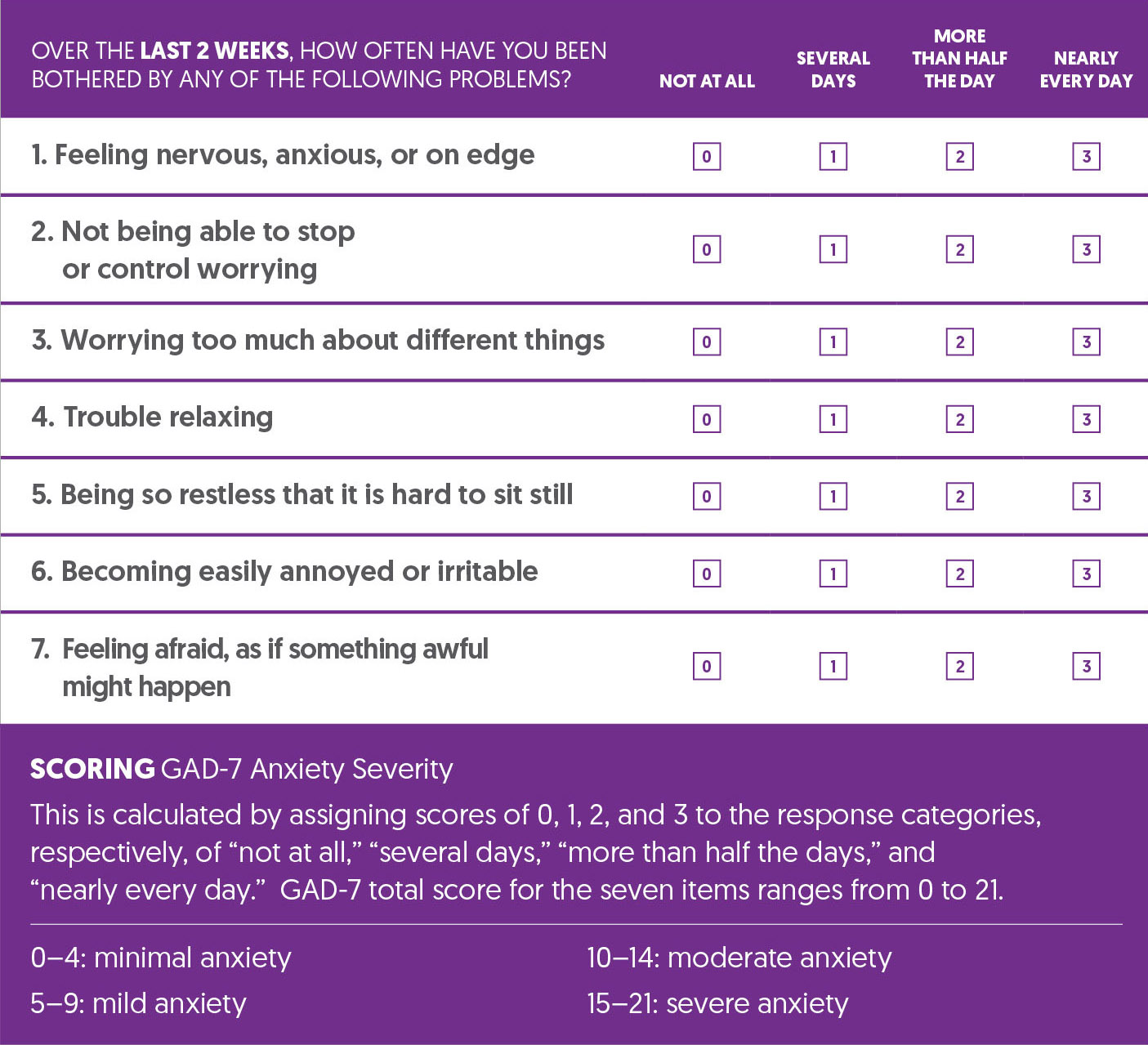
The General Anxiety Disorder-2 (GAD-2) is an initial screening tool for generalized anxiety disorder (GAD), comprising the first two questions of the General Anxiety Disorder-7 (GAD-7). A GAD-2 score of 3 or more warrants completion of the GAD-7 scale. (7)
While no scale is diagnostic, these tools are intended to help identify pre-surgical patients who may be experiencing more significant symptoms, who may benefit from targeted pre-surgical intervention.
Patient Health Questionnaire-9 (PHQ-9)
Generalized Anxiety Disorder-7 (GAD-7) Questionnaire
Prehabilitation and Optimization Algorithm
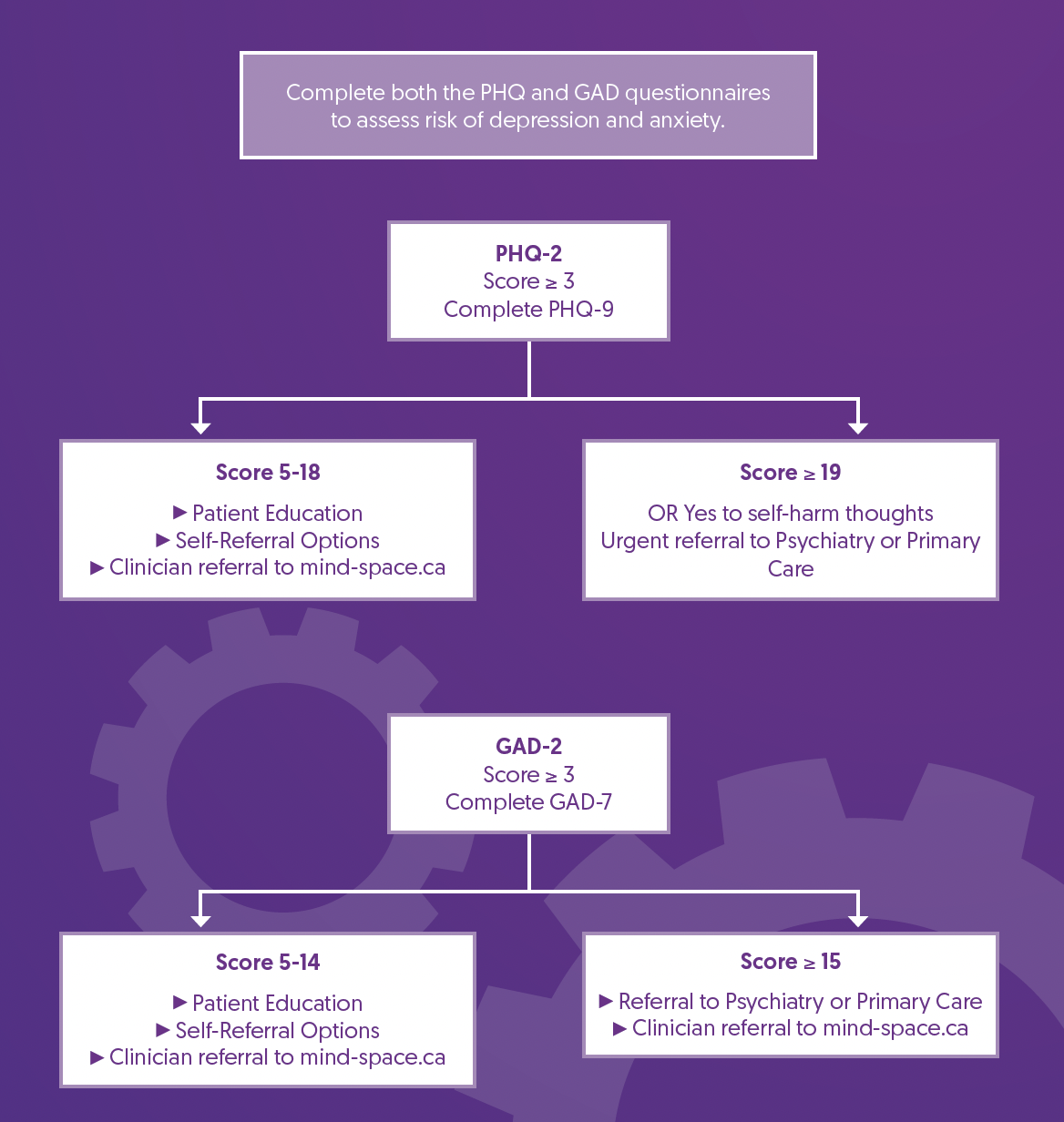
Prehabilitation and Optimization Recommendations
| Clinician tips on Reframing Benefits vs Emphasizing Risk |
The language clincians choose can meaningfully shape patient experience. During informed consent or risk discussions, framing recommendations in terms of benefits - rather than focusing solely on risks - can foster reassurance and engagement.
To explore how language and suggestion can influence patient health - positively or negatively - consider these resources:
|
| Patient Education |
|
| Self-Referral Options |
|
| Physician-Referral Options |
|
References
1. Browne, J. A., Sandberg, B. F., D'Apuzzo, M. R., & Novicoff, W. M. (2014). Depression is associated with early postoperative outcomes following total joint arthroplasty: a nationwide database study. The Journal of arthroplasty, 29(3), 481–483. https://doi.org/10.1016/j.arth.2013.08.025
2. Geoffrion, R., Koenig, N. A., Zheng, M., Sinclair, N., Brotto, L. A., Lee, T., & Larouche, M. (2021). Preoperative depression and anxiety impact on inpatient surgery outcomes: A prospective cohort study. Annals of Surgery Open, 1(e049). https://doi.org/10.1097/AS9.0000000000000049
3. 10. Li, L., Li, S., Sun, Y., Zhang, S., Zhang, X., & Qu, H. (2021). Personalized Preoperative Education Reduces Perioperative Anxiety in Old Men with Benign Prostatic Hyperplasia: A Retrospective Cohort Study. Gerontology, 67(2), 177–183. https://doi.org/10.1159/000511913
4. Ng, S. X., Wang, W., Shen, Q., Toh, Z. A., & He, H. G. (2022). The effectiveness of preoperative education interventions on improving perioperative outcomes of adult patients undergoing cardiac surgery: a systematic review and meta-analysis. European journal of cardiovascular nursing, 21(6), 521–536. https://doi.org/10.1093/eurjcn/zvab123
5. El Khoudary SR, Greendale G, Crawford SL, Avis NE, Brooks MM, Thurston RC, Karvonen-Gutierrez C, Waetjen LE, Matthews K. The menopause transition and women’s health at midlife: a progress report from the Study of Women’s Health Across the Nation (SWAN). Menopause. 2019;26:1213–1227. doi: 10.1097/GME.0000000000001424
6. Bromberger JT, Epperson CN. Depression during and after the perimenopause: impact of hormones, genetics, and environmental determinants of disease. Obstet Gynecol Clin North Am. 2018;45:663–678. doi: 10.1016/j.ogc.2018.07.007
7. Behrman S, Crockett C. Severe mental illness and the perimenopause. BJPsych Bulletin. 2024;48(6):364-370. doi:10.1192/bjb.2023.89
8. Canadian Menopause Society Pocket Guide Menopause Management: A practical tool for healthcare professionals. Retrieved March 6, 2026, from https://www.canadianmenopausesociety.org/professionals/publications/
9. Instructions for Patient Health Questionnaire (PHQ) and GAD-7 Measures. (n.d.). Retrieved August 26, 2024, from https://www.phqscreeners.com/images/sites/g/files/g10016261/f/201412/instructions.pdf
10. Kroenke, K., Spitzer, R. L., & Williams, J. B. (2003). The Patient Health Questionnaire-2: validity of a two-item depression screener. Medical care, 41(11), 1284–1292. https://doi.org/10.1097/01.MLR.0000093487.78664.3C
11. Plummer, F., Manea, L., Trepel, D., & McMillan, D. (2016). Screening for anxiety disorders with the GAD-7 and GAD-2: A systematic review and diagnostic meta-analysis. General Hospital Psychiatry, 39, 24-31. https://doi.org/10.1016/j.genhosppsych.2015.11.005